
Ari Rosenberg, PhD – Slide of the Week
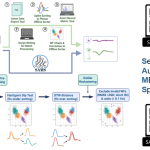
Neurons derived from human pluripotent stem cells (hPSCs) are valuable models for studying brain development and developing therapies for brain disorders.
July 10, 2026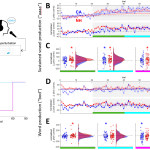
Ben Parrell, PhD – Slide of the Week
Sensory errors, mismatches between predicted sensory outcomes of movement and reafferent sensory feedback, drive changes in the feedforward control of future motor behavior that correct for those errors.
June 19, 2026
Marsha R. Mailick, PhD – Slide of the Week
Age Trajectories of FXTAS-type Symptoms Total score by FXTAS Family History and College Degree Attainment in FMR1 Premutation Carrier Women
June 5, 2026
Krishanu Saha, PhD – Slide of the Week
Editing measurements, microphysiological systems (such as organoids and organs-on-chips) and in vivo imaging techniques present a spectrum of information across different scales, from single nucleotides in vitro to the whole body in vivo.
May 18, 2026
Luigi Puglielli, MD, PhD – Slide of the Week
The endoplasmic reticulum acetylation machinery has emerged as a new branch of the larger endoplasmic reticulum quality control system.
May 1, 2026
Caroline A Niziolek, PhD – Slide of the Week
Young adult speakers can be induced to increase the acoustic contrast between vowels through exposure to a nonuniform auditory "centralization" feedback perturbation that makes vowels sound less distinct from one another.
April 17, 2026
Ruth Litovsky, PhD – Slide of the Week
We studied Cognitive load by measuring both speech understanding in noise and pupillometry (Pupil dilation).
April 1, 2026
Margarita Kaushanskaya, PhD – Slide of the Week
Children born preterm are at an elevated risk of language delays compared to children born full-term.
February 27, 2026
Katherine Hustad, PhD – Slide of the Week
Does the Use of Crowdsourced Listeners Yield Different Speech Intelligibility Results Than In-Person Listeners for Typically Developing Children?
February 13, 2026
Tracy L. Hagemann, PhD – Slide of the Week
Alexander disease (AxD) is a rare neurological disorder caused by dominant gain-of-function mutations in the gene for glial acidic fibrillary protein (GFAP).
January 26, 2026- More Slide of the Week posts
Advancing knowledge of human development, developmental disabilities, and neurodegenerative diseases.